





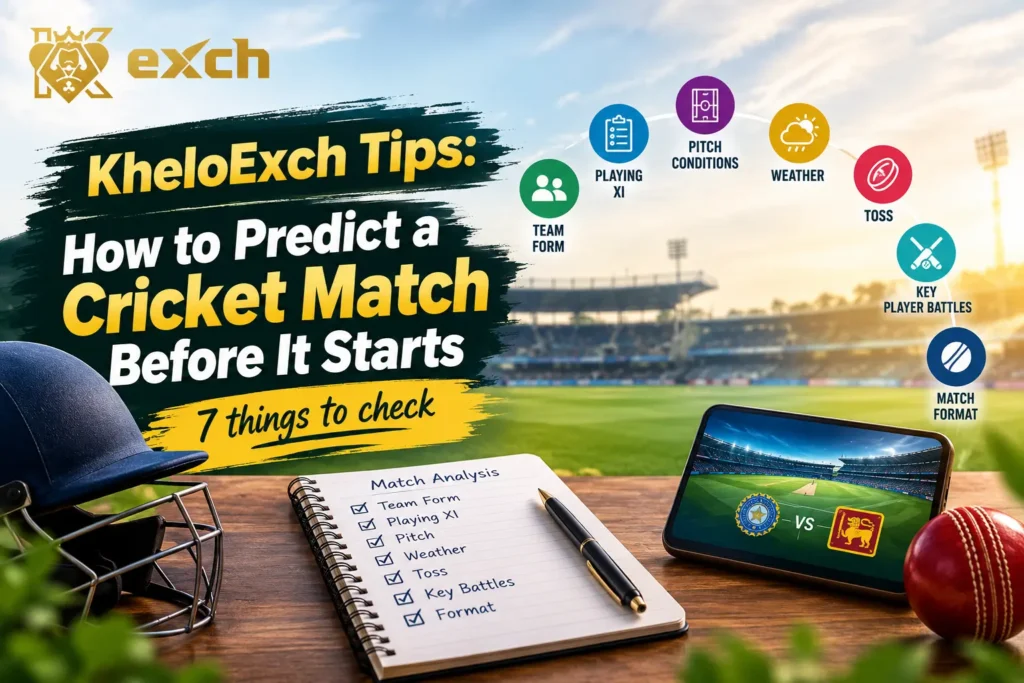
A cricket match can be a very different proposition before the first ball is bowled. The teams can be strong, but there are many small things that can affect the development of the game. All these matter. Pitch, weather, recent form, playing XI, and toss.
So how can a fan read a cricket match before it starts?
The answer is simple: watch the game from different angles, not just one team or one player. This guide takes you through some simple things to check before a game begins.
Note: Match conditions are subject to rapid change. Use current information, abide by the rules of your location, and treat cricket analysis as information and not a guarantee of any result.
Start with the Two Teams
First, take a look at the teams playing the cricket match. Don’t judge them by their name or their reputation.
Instead, look at their recent performance. A team that has won a few games recently might feel confident. But past results don’t always predict the next game.
Also compare the strengths of both sides.
One side may have a better batting order, the other better bowling options, for example. So the match could turn into a battle between these two areas.
Quick team check
| What to check | Why it matters |
| Recent results | Shows current form |
| Top batters | Helps understand batting strength |
| Main bowlers | Shows the team’s wicket-taking options |
| All-rounders | Gives the team more balance |
| Recent head-to-head games | Adds useful background |
| Home or away record | Conditions may affect performance |
Look at the Playing XI
Next, check the expected/confirmed playing XI.
This is particularly useful because the absence of one player can alter the balance of a team. For example, if the usual opening batter is injured, another person may have to take his place.
In the same way, if a regular fast bowler is absent, the captain could have no bowling options.
But don’t expect a new player to play bad. Sometimes a replacement gets a golden opportunity and makes a great contribution.
So, don’t just look at the big names; ask: Is the playing XI balanced?
What the Pitch Will Tell You
After checking the teams, look at the field.
A cricket pitch is either suitable for batsmen, fast bowlers, or spinners, according to its condition. But pitch behaviour may also change during the match.
A hard flat surface may permit the batters to play their shots. However, a pitch with more movement can make it difficult to bat, especially in the early part of the innings.
Meanwhile, a dry surface could develop the spin into play.
So pitch reports can be a good starting point, but they shouldn’t be viewed as a final answer.
Another important clue can be the weather.
Weather can affect a cricket match in a number of ways.
Cloudy conditions may aid swing bowlers in some situations. Rain, however, can shorten the overs or even halt the game.
Moreover, dew can be significant during evening games. A wet ball may be more difficult for bowlers to control. Batting conditions may change later in the game.
Check the venue’s latest weather forecast before the match. Most importantly, remember that forecasts are not set in stone.
Watch the Toss, But Don’t Depend on It
Another part of pre-match analysis is the toss.
The captain has to decide whether to bat or bowl first after winning the toss. That can depend on the pitch, weather, format, and conditions.
For example, the captain might choose to bowl first if they reckon the pitch will be easier for batting later. In another match, the team might prefer to bat first to put pressure on the chasing team.
The main point is simple. The toss can influence a cricket match, but it does not decide the winner.
Check the Key Player Battles
Now we get to one of the more interesting parts.
Don’t look at every player; concentrate on a couple of key battles.
One of the key contests of the match can be a top batsman versus a good fast bowler. Similarly, an intriguing contest can be a spinner against a batsman who struggles against spin.
You may say:
- Will the new ball trouble the openers?
- Which bowler can trouble the best batsman?
- Will there be some turn in the middle overs?
- Which all-rounder can deliver in both innings?
These questions make the analysis of a match easier and more interesting.
Don’t Ignore the Match Format
The same side can play differently in different formats.
In a T20 cricket match, the requirement is for aggressive bowling and fast scoring. In an ODI, there is more time to build an innings. The format of Test cricket is so different because you could be out there for days.
So always take the format into account when judging a team’s style.
Pre-Match Checklist Made Simple
It is not necessary to have complicated statistics to understand a cricket match before it has started.
Use a simple checklist.
1. Team form: Look for recent form.
Then, 2. Playing XI: Look for important changes,
3. Pitch: Know whether it is good for Batting or Bowling.
4. Weather: Look for rain, wind, heat, and possible dew.
5. Key matchups: Who are the players that could decide the game?
This method gives you a better picture without making it overly complicated.
How can readers of KheloExch use these tips?
Fans following cricket on KheloExch can use these basic tips to understand matches more easily. Khelo Exchange readers can also compare team form, playing conditions, and roles of players before the first ball is played.
But it is important to have realistic expectations. With any analysis, you can never know what will happen in a cricket match. A dropped catch, a sudden wicket, an injury, or a change in the weather can quickly change the game.
This is what makes the game of cricket so interesting.
Frequently Asked Questions
1. What to check before a cricket match?
Start with team form, playing XI, pitch conditions, weather, the toss, and key player matchups.
2. Is the result decided by the pitch?
No. A pitch can affect how a match is played, but both teams have to perform.
3. Why is the playing XI important?
The playing XI shows the available players. Lose a batsman, bowler, or all-rounder, and the balance of the side can change.
4. How does weather influence cricket?
Rain can reduce the number of overs or stop play. Wind, cloud cover, and dew can also impact bowling and batting conditions.
5. How important is the toss?
A toss can decide the team that bats or bowls first. But it doesn’t guarantee the result of the match.
6. Does pre-match analysis help in predicting the winner?
No. Analysis will help you understand the teams and conditions, but cricket is unpredictable.
Closing Thoughts
Reading a cricket match before it starts isn’t about finding one perfect answer. “It’s more about putting a couple of little pieces together.
Check the teams. Now, let’s look at the playing XI, pitch, weather, format, and key player battles. Then watch how the match actually develops.
Above all, enjoy the game and use cricket analysis to understand what is happening on the pitch – not as a promise of a particular result.